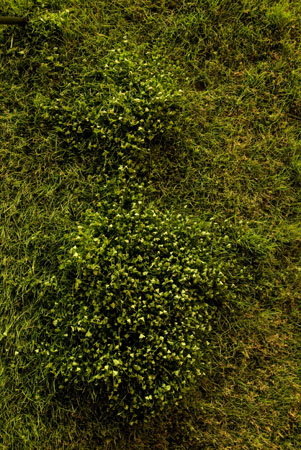


(Originally published in On The Natural back in January of 2008 )
I grew up in rural central Indiana in the middle of fields that were planted with corn, peas and soybeans. After my brother and I left home, my parents decided to move for a variety of reasons. Not the least of which was the fact that it took a lot of work to keep the three acres of land where we lived in good shape.
They relocated to a housing development closer to town. Now when I go home for Christmas it’s to a much larger house on streets lined with young, weather-beaten saplings. I like to go out walking in the cold air when I’m there. It’s gray, wet and chilly — a pleasant break from the sunshine of Los Angeles, where I’ve lived for the last decade.
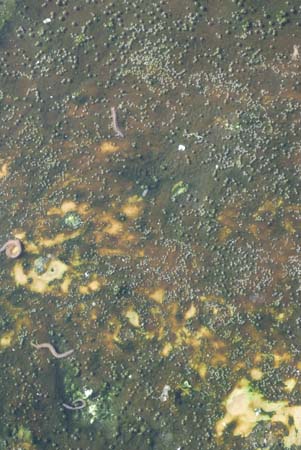
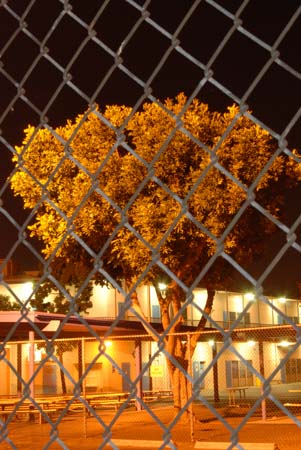
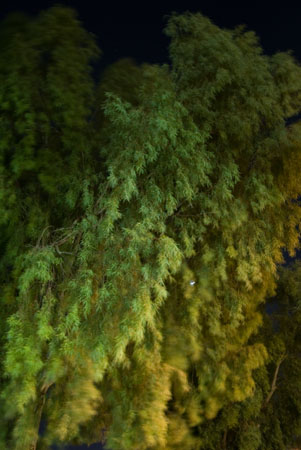
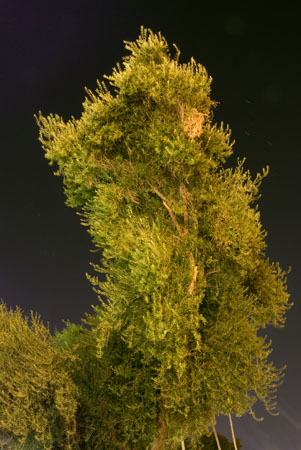
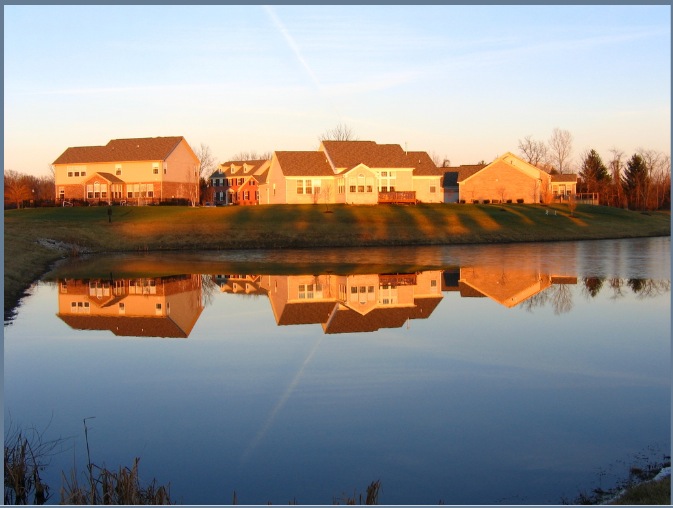
The area around their housing development is mostly under construction: Farmland and forest that is being turned into tidy neighborhoods with names forcing awkward connotations of the rustic idyll that they are replacing, e.g Brittany Chase, Hunter’s Glen, Cobblestone Lakes, Corduroy Farms. My walk this year took me past mud fields, drainage ponds inhabited by muskrats and herons; solitary lampposts, dormant construction sites and half-built houses. Some of these will no doubt be completed, while some of the prefabricated mini-mansions will sit empty for years (just waiting for a family of upwardly-mobile exurban squatters, perhaps) as the housing market in central Indiana is not immune to the economic shifts in the larger US real-estate market. These are some of the pictures that I took on my walk on the day after Christmas, learning to use the lovely camera that my mom and dad gave me.
Thanks, as always, to my parents for hosting me over the holidays.
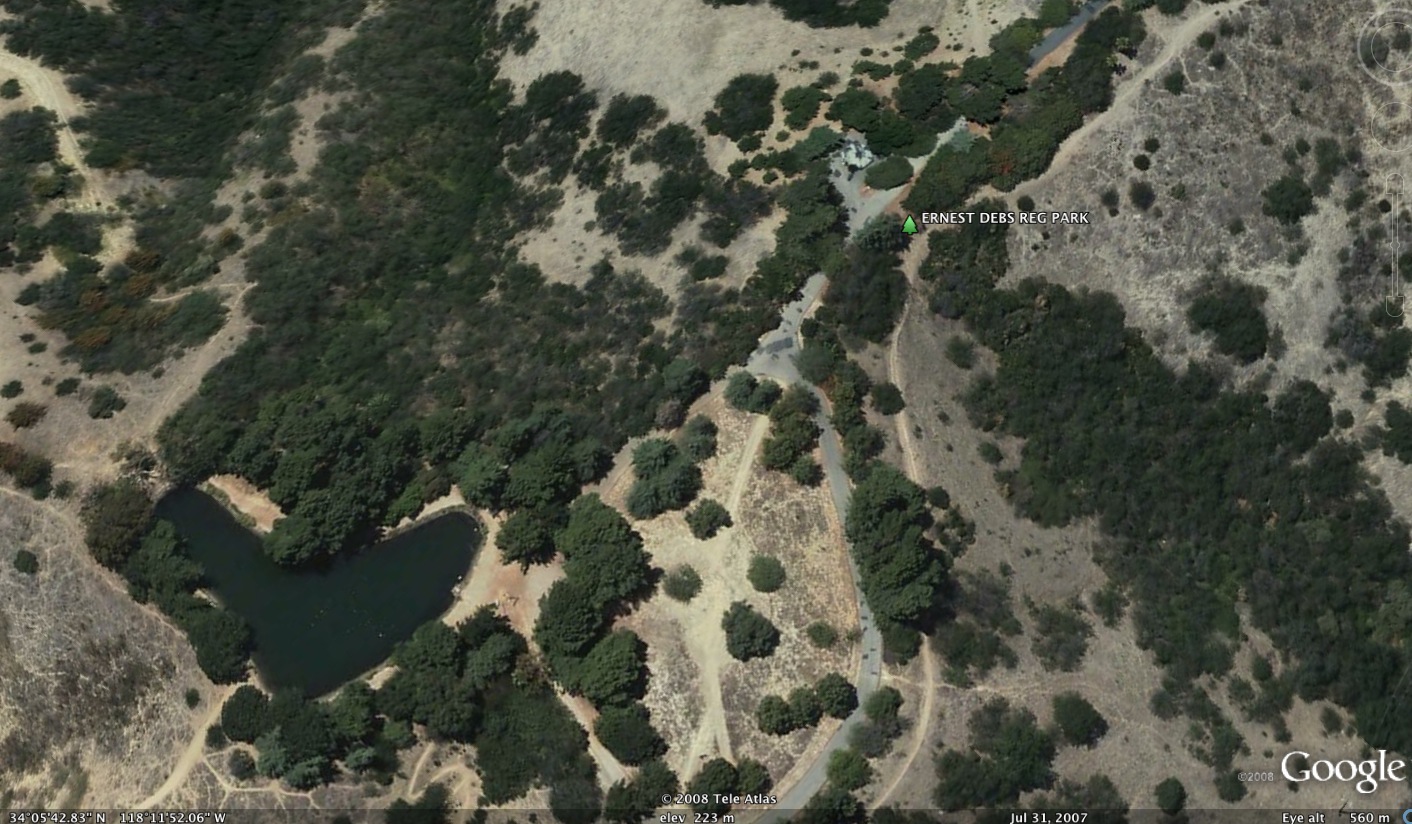
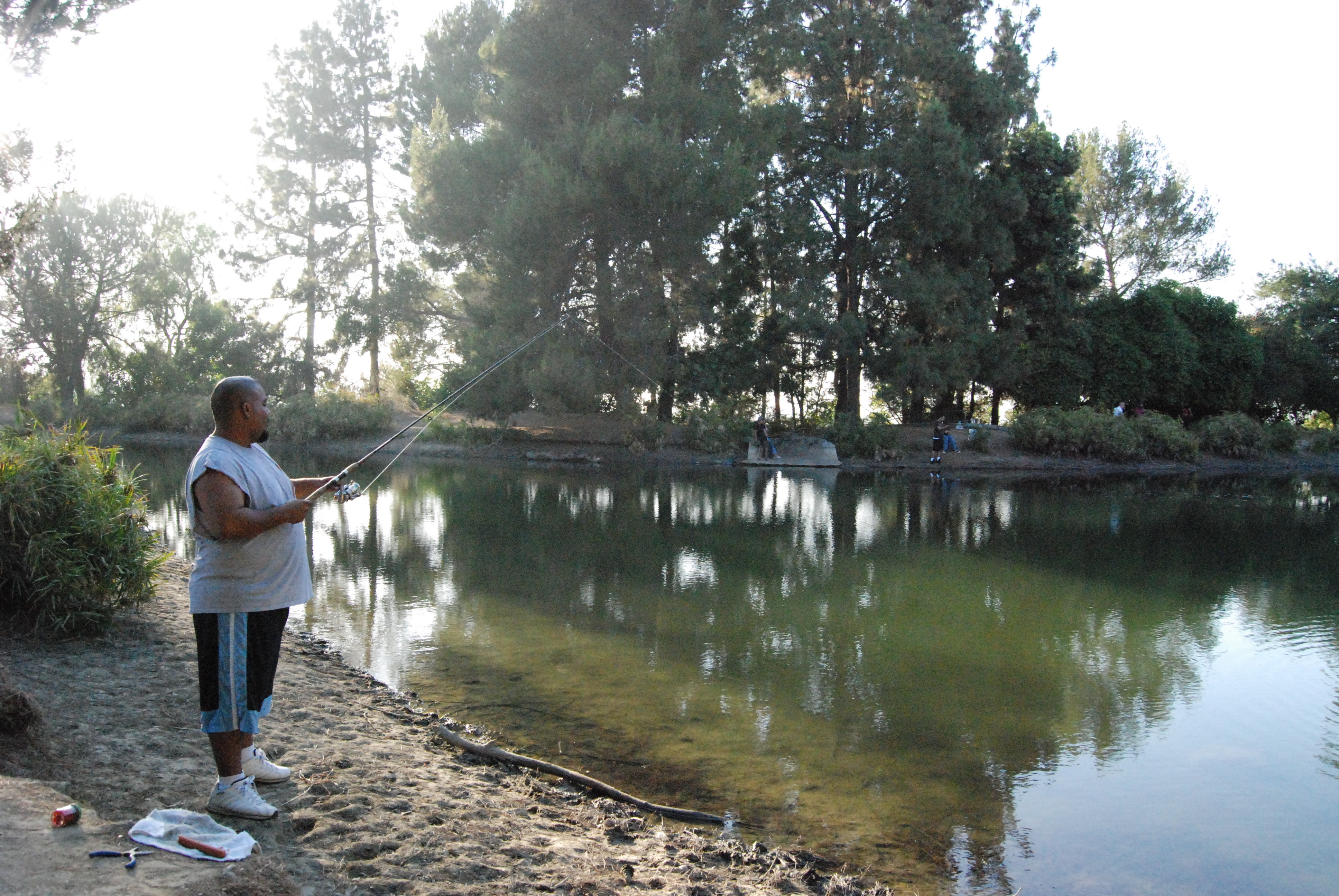
The June 9 2008 Expedition into Debs Park got off to a rousing start, as my companion’s dog Baroo did purloin a Hot Dog from some fishermen. They were using the Hot Dog for bait, and it was working. They hauled a tiny ovular fish from the depths of Debs Pond. The fish’s future was uncertain as they were going to give it to some other guys fishing on the far side of the pond.
Afterward we looped around the hillsides, and began another ascent to the pond. It was here that we did see many snails in their coiled cylinder shells, expired and dried, ascent up crispy stalks of dead grass frozen in the sunshine.
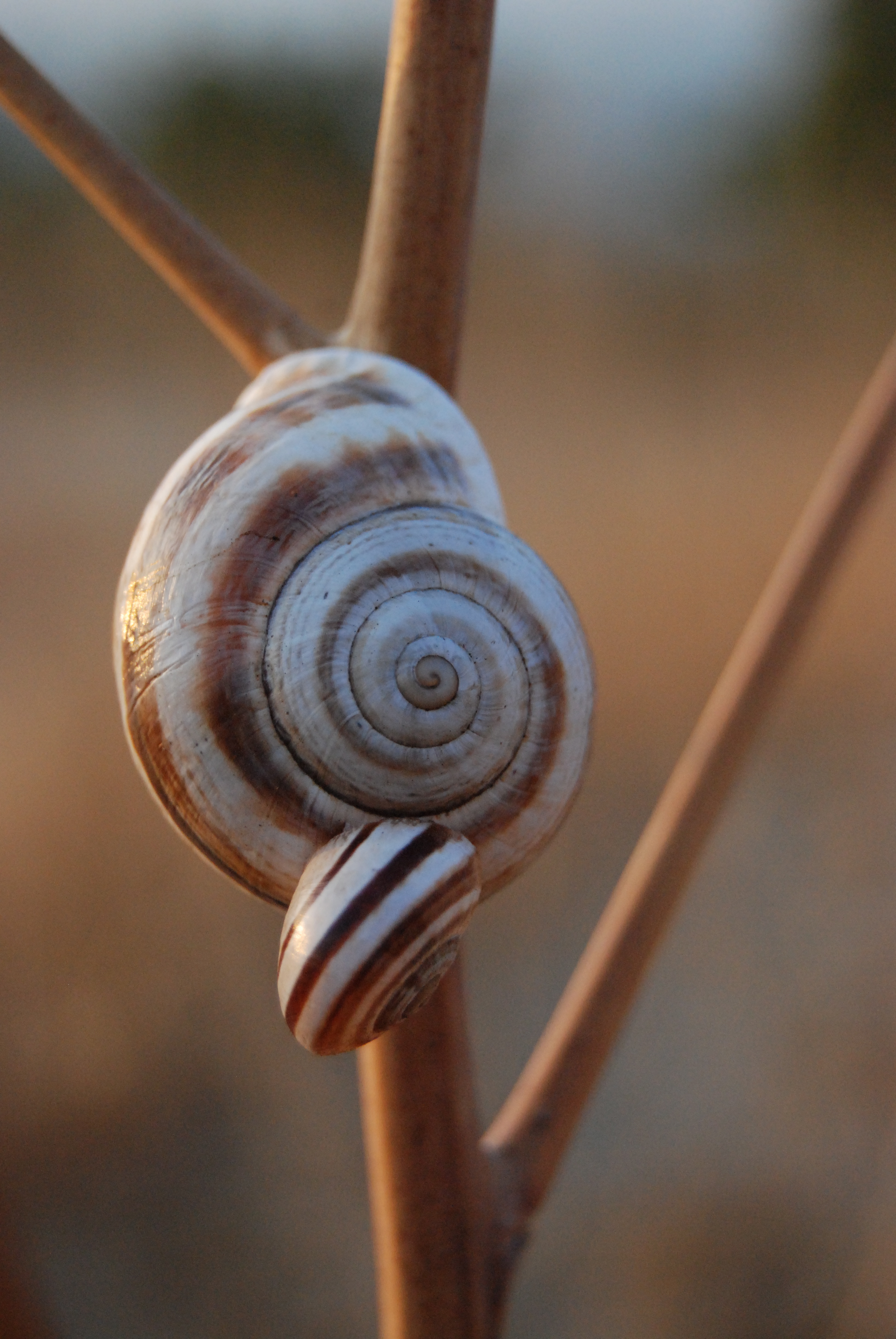
It is of such equiangular spirals as we see in their shells that Roman poet Pliny saw “magna ludentis naturae varietas” (the vast variety of nature at play), a quote that I came across while browsing D’arcy Wentworth Thompson’s 1942 biology classic On Growth and Form. Thompson:
In the great majority of cases, when we consider an organism in part or whole, when we look (for instance) at our own hand or foot, or contemplate an insect or a worm, we have no reason (or very little) to consider one part of the existing structure as older than another; through and through, the newer particles have been merged and commingled among the old; the outline, such as it is, is due to forces which for the most part arte still at work to shape it, and which in shaping it have shaped it as a whole. But the horn, or the snail-shell, is curiously different; for in these the presently existing structure is, so to speak, partly old and partly new. It has been conformed by successive and continuous increments; and each successive stage of growth, starting from the origin, remains as an integral and unchanging portion of the growing structure. Read More
Originally published June 2008 on The Uber Index
Plants can recognize their relatives, in some cases better than animals. Certain parasitic species can “sniff” out the chemical benefits of their neighbors, and then in turn make decisions about their future hosts based on what they smell. Continuing research into such botanical arenas is not only fascinating to readers beyond the audience of the journal of the United Kingdom’s national academy of science, but it also has the readers of those journals up in arms.
Science has its methodology of observation and experimentation, which moves slowly by design in order to provide accurate, reproducible data. But when the findings from such studies are as fascinating as those discussed in the New York Times story below, it’s inevitable that writers, artists and even scientists will start to imagine all sorts of possibilities for plants, calling it consciousness, sentience or just intelligence.
This tends to put a twist in the panties of a lot of mainstream scientists. Which seems like a good thing to us, as such flights of fancy have inspired the work of visionary ecological thinkers from Amazonian shamans to Goethe to Michael Pollan. We’d also say that a lack of imagination when it comes to botanical science is partly to blame for the fact that its taken Western science centuries of plant research to recognize such profound things about the organisms that comprise 90 percent of the Earth’s biomass.
Read on in the New York Times: “Loyal To Its Roots” by Carol Kaesuk Yoon
 |
Soon after our arrival (it’s about an hour drive from Los Angeles) we met the dreadlock soldier pictured above, who’s showing off a dried up little morsel of fungus — I forget the actual classification, you’ll have to forgive me — that he unearthed from under an oak tree.
 |
Eden and I turned up this tiny little pleated fellow by rustling around in some damp leaves, not far from where I was goofing around taking pictures of some lichens.



 intothegreen.org