Archive

Mountains

Temples of Time

The National Film Board of Canada was founded in 1939 in part as a way to distribute World War II propaganda throughout the Great White North, but went on to become a bastion for experimental animation, “socially relevant documentaries” and other film projects “which provoke discussion and debate on subjects of interest to Canadian audiences and foreign markets.” In particular the NFB is known for producing some of the dreamiest nature documentaries of modern times — it’s where Boards of Canada got their name and a lot of their soft-focus naturalist vibes. And now the NFB has started posting their library of films online.

A lot of these docs are wordless montages of natural imagery accompanied by droning Eno/Tangerine Dream-style synthesizer soundtracks — our favorite so far is William Canning’s 26-minute short Temples of Time (1971), described by the NFB as follows:

A mountain is a living thing; it has an ecological balance, a process of evolution manifested in slow, subtle ways; but it is also subject to the ravages of human intervention. Filmed in the Canadian Rockies and in Garibaldi Park, this picture brings to the screen magnificent footage of mountain solitudes and the wildlife found there, of natural splendor in all its changing moods. The film carries the implicit warning that all this may pass away if people do not seek to preserve it.

Hook your computer up to your stereo for the full effect of Edward Kalehoff’s warbling synth drone soundtrack. Who needs to figure out the whole new digital TV upgrade chip whatever thing when we’ve got this treasure trove to explore? More to come …

Note: I’ve cross-posted over at the Arthur Magazine blog along with the embedded video.
More:

Old Growth: Indiana Pioneer Mothers Memorial Forest – December 28, 2008

Kelso Dunes, Mojave National Preserve (Part 1 of 3)

Alaka’i Swamp, Kaua’i – July 27, 2008

Light Pollution Series One: Artificial Night Lighting and Photosynthetic Organisms

Garfield Park Conservatory, Chicago – December 21, 2008

Rancho Mesa, Mojave Desert – October 12, 2008

Red Hill & Salton City, Salton Sea – October 6-7, 2008

Arrived in Lihue, Kaua’i from LAX around 10pm. Rented my car and drove through light rain down the  two-lane roads splitting Wailua, Kapa’a and other small towns down the middle. Air smells like wet floppy plants and dirt. This is my first trip to the tropics, so I think it smells like a swamp. Like the North American almost-tropics of the Everglades and the Atchafalaya bayous. I crank the defrosters and turn the local contemporary reggae station up for an irie version of The Cars’ “Drive.” Tuning around to a hippie New Age broadcast where a spaced-out lady DJ talks about all the bad vibes on the mainland, and how Kaua’i has to radiate more positivity or something. Then she plays some trance music so it’s over to another reggae station.

Read More

If you’re into good times in the great outdoors, the place to be in Southern California is the Cleveland National Forest. I did not know this until a couple weekends ago, when a bunch of us Arthur folks — that’d be me, Jay and Eden — headed out to the Santa Ana Mountains that mark the border of Orange and Riverside counties for one of the Los Angeles Mycological Society‘s mushroom forays.

Soon after our arrival (it’s about an hour drive from Los Angeles) we met the dreadlock soldier pictured above, who’s showing off a dried up little morsel of fungus — I forget the actual classification, you’ll have to forgive me — that he unearthed from under an oak tree.

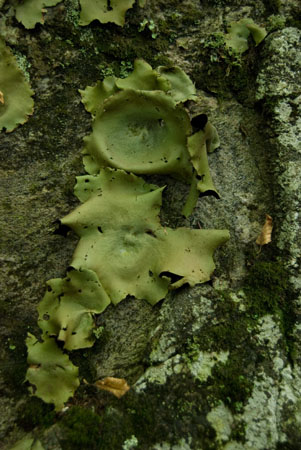
Eden and I turned up this tiny little pleated fellow by rustling around in some damp leaves, not far from where I was goofing around taking pictures of some lichens.

Read More

img_02041

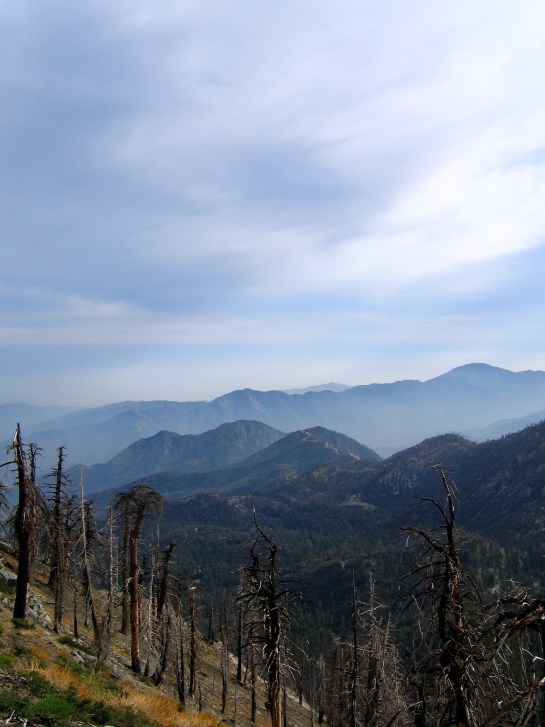
The first time I walked up Mt. Islip — an 8,000 foot peak in the San Gabriel Mountains, about 50 miles from my house in Northeast Los Angeles — I came down by moonlight sort of by accident. I tend to get a late start on a lot of my hikes, mostly because I enjoy weekend mornings zoning out on my porch listening to Francoise Hardy, drinking a cherry-walnut smoothie and watching my cat Spider run around in the yard.

The trail is an easy three or four miles one way, and I arrived at the top just as the sun was starting to set, barely making out the towers of downtown Los Angels through the orange haze. I hung around on the peak — bald rock with four chunks of cinder block, the foundation of a long-gone fire watchtower from the 1930s — until the light was mostly gone. It wasn’t until I was making my way down in the dusk when it occurred to me that the woods were still crawling with hunters. It was the heart of deer season, November 5, 2006, and the Islip Saddle parking lot had been full of pickup trucks and camo-sporting Latino dudes hanging out with their freshly-killed deer carcasses rather than the usual crowd of white granola-types and their Subaru Outbacks.
243495977_58_original1
The moon came up over the mountains about an hour after dark, illuminating every crooked branch of the trees on the fire-scarred ridgeline above me. It glowed and sparkled silver on the rock that sloped up from the fire road I was walking, and it shined in the arc of pee that I sent running down the closed, two-lane blacktop highway that I’d followed to the trailhead. (The Angeles Crest Highway has been closed with a heavy gate at mile 64.1 for months now, I think because of some rockslides further east.) I was singing a jolly country song about a guy who killed a woman in Tennessee and was now running for the Mexico border when I realized that two hunters, sitting by the side of the road, had been watching me from a distance as I ambled along, dancing and urinating gratuitously in the middle of the road. Yeesh. “Buenas noches, cazadores,” I said, remembering the word for “hunters” from a tequila bottle. “Uh-huh,” they replied, understandably unimpressed. They asked me if I’d seen their friend, who was long overdue at the parking lot. I told them I hadn’t seen anyone, and walked on.

Read More

The Gabrielino Trail runs almost 30 miles from Pasadena’s Jet Propulsion Laboratory to Chantry Flats, winding its way through the turn-of-the-19th Century human ruins that litter the front range of Southern California’s San Gabriel Mountains. A kind of “hiking boom” in the 1890s had gentleman wood-walkers rambling about these hills with their fancy moustaches and OG L.L. Bean gear, building huts, cabins, bridges and dams.

6a00d83455629c69e200e554a9ce0a8833-320wi

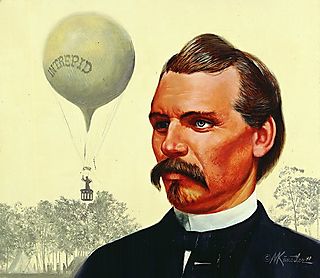
Most spectacular among these intrusions into the wilderness is the work of Professor Thaddeus Lowe. An entrepreneur and self-trained scientist, Lowe spent the Civil War years doing aerial reconnaissance of Confederate positions from a balloon. He moved to Pasadena, CA in 1887, started a bank and in 1893 opened a railway that scaled up 3,250-foot high Echo Mountain, where he’d constructed a chalet. Several years later he opened another hotel and tavern on the mountain. By 1905 the mountains had rejected all of these structures, destroying them by way of fire and flood. All that remains are a few cement foundations and an abandoned train tunnel, along with the decaying roadways and stone walls that are peppered throughout this wilderness that abuts the affluent suburbs that spread east along the foothills.

I returned to seek the Royal Gorge on a hot Saturday afternoon, the first weekend of July. The Gabrielino Trail is an easy walk for the first few miles as its an old road. Bridges with truck-weight specifications span the lively creek, thick glades shade the trail and stonemasonry juts out of the hillsides: terraced gardens of agaves that mark old campgrounds and graffiti-marked foundations of what look to be houses. Occasionally the trees are scarred with more graffiti, the older it is the higher it lies on the trunk.

Read More

Another classic from On The Natural:

My first attempt at the Royal Gorge, a swimming hole in the front range of the San Gabriel Mountains of Southern California, ended with me squealing like a pig and scrambling like a goat over the rocks, logs and boulders of Long Canyon. I’d failed to reach the gorge itself; I decided to turn back while suspended on a rock wall over a murky pool of algae-choked water. I’d just hurled my walking stick over the pool and was unbuckling my pack to throw that as well, intending to leap after these accessories and continue the quest. I paused for a minute and watched a California Newt paddling in the muck below. Read More